


The name Tizona
A Spanish name with a lasting association with El Cid and his legendary sword.
Tizona takes its name from the sword associated with Rodrigo Díaz de Vivar, El Cid, in Spanish epic tradition.
The Museo de Burgos connects the name with tizón, a burning piece of wood.

El Cid / The historical figure
From exile to the rule of Valencia
El Cid was an 11th-century Castilian commander. He built his career through military service and political alliances among the Christian and Muslim rulers of medieval Iberia.
- 1081
Exile
After losing Alfonso VI's favor, Rodrigo left Castile.
- 1080s
Service and alliances
He served the rulers of Zaragoza and built his military standing.
- 1094
Valencia
He conquered Valencia and established his own rule over the city.
- 1099
Death in Valencia
He died in Valencia. His reputation continued to grow in later literature.
Unjustly banished by his king, El Cid remained loyal, rose above his circumstances, earned the respect of the public, and went on to rule Valencia — forging a name that would outlive the kingdoms he served. El Cid became an enduring example of dignity through adversity.
The Cantar de mio Cid
Honor is lost, earned and restored
Exile
The poem begins with banishment. Rodrigo loses royal favor and leaves home with a small band of loyal followers.
Reputation
Military victories restore his wealth and standing. He seeks reconciliation with the king and reunites his family in Valencia.
Betrayal
His daughters' marriages promise acceptance, but their husbands abuse and abandon them. The family's honor is injured again.
Restitution
El Cid brings his grievance before the king. The court, the return of his swords and judicial duels restore the family's honor.
Tizona / Object and symbol
The sword's function and meaning
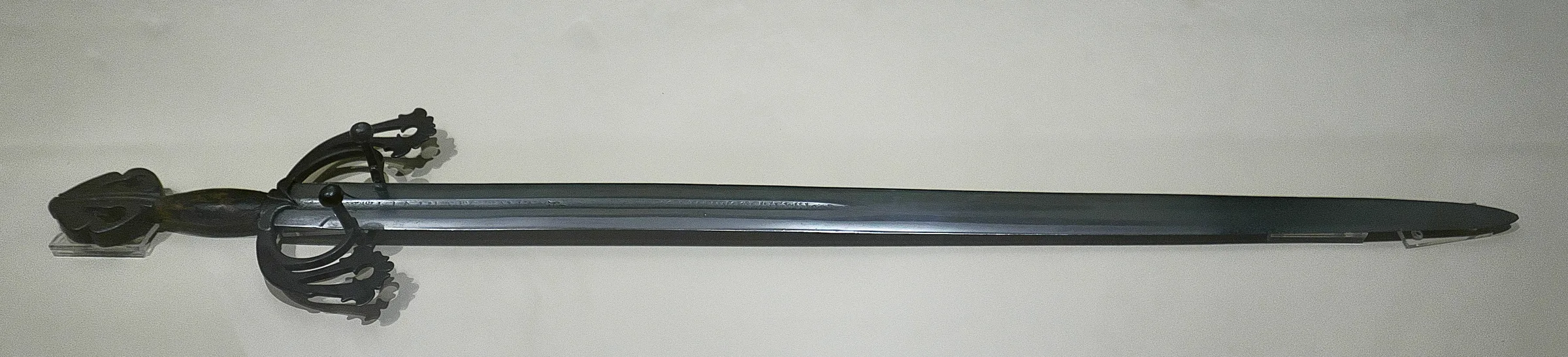
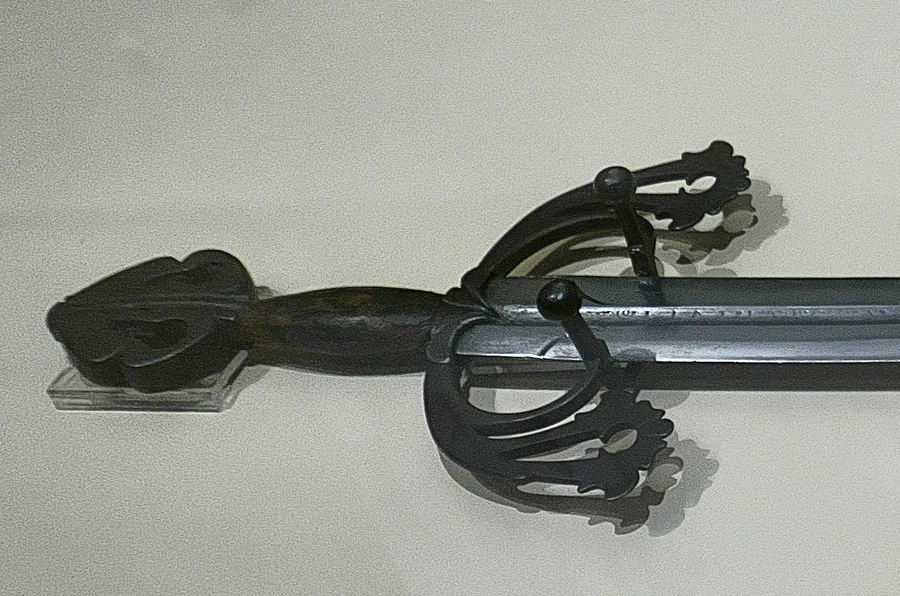
The sword exhibited as Tizona at the Museo de Burgos
“Tizona, espada de Rodrigo Díaz de Vivar” by Jl FilpoC, 2018, Wikimedia Commons, licensed CC BY-SA 4.0. Cropped and resized; this version is shared under the same licence.

A working weapon
The museum describes a heavy cutting blade suited to mounted combat. Its craft and material also made it an object of considerable value.
The sword in the poem
El Cid wins Tizona in battle. He later gives it to his sons-in-law and demands it back after their betrayal.
Meaning for the brand
The sword represents authority entrusted by a client. Tizona must act within the agreed scope and be able to explain its actions.
The museum sword's direct ownership by El Cid is unproven. The brand draws on the literary tradition.
Emblem meaning
The sword and the exchange of trust

Grip
The upper chevron sets the direction of the mark.
Guard
The interlocking center represents the relationship between client and firm.
Blade
The lower point gives the mark a clear axis and sense of purpose.
Giving and receiving
One hand gives and the other receives. The exchange suggests a client's mandate and Tizona's duty to carry it out.
Protection and limits
The outer forms contain the exchange. They suggest protection and the boundaries of the work agreed with the client.
Logo evolution
Tizona: sword to symbol
A conceptual reduction of the sword into the approved mark
-

Full sword
The complete weapon
-

Emblem in the hilt
Interlocking forms shape the guard
-

Shortened blade
The blade contracts into the mark
-
 Strategic Partners
History, literature and the sword
The historical life
Alberto Montaner Frutos / Camino del Cid
The historical Rodrigo Díaz: exile, service in Zaragoza, the conquest of Valencia and his death in 1099.
The literary hero
Camino del Cid / Synopsis of the poem
The arc from exile to restored honor, including the betrayal of his daughters and the court at Toledo.
The museum object
Museo de Burgos / Espada Tizona
The blade's cutting function, craftsmanship and name. The museum distinguishes the object from an unproven direct link to El Cid.
The word
Real Academia Española / tizona
The dictionary records the word's association with El Cid's famous sword.
History and literary narrative are identified separately. Brand meanings are contemporary interpretations.
